Goniometers
Goniometers are essential instruments in photonics and optical measurement, enabling precise characterisation of light distribution as a function of angle. These systems are widely used to analyse the angular emission patterns of light sources, providing critical data for applications such as LED testing, luminaire design, and optical system validation.
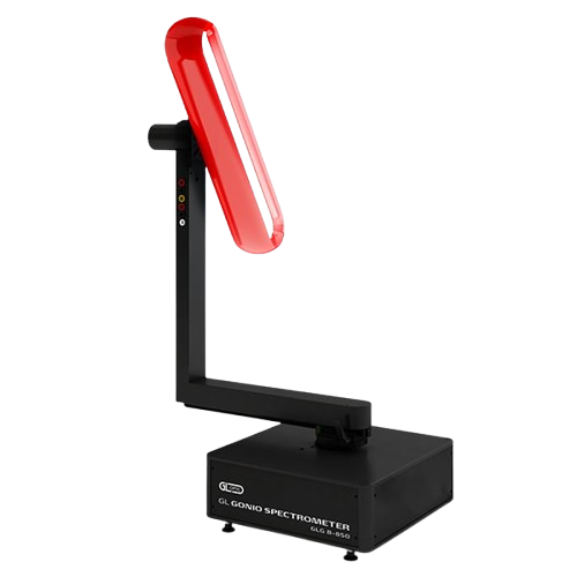 Open product: GL GONIO SPECTROMETER GLG 8-850
GL GONIO SPECTROMETER GLG 8-850
This easy-to-operate system combines the functionality of a goniophotometer with the features of a spectroradiometer… Read more
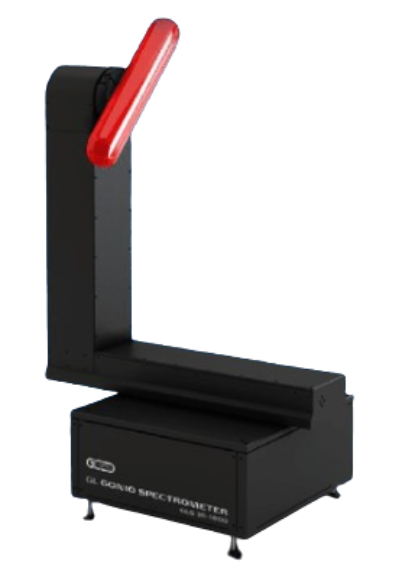
 Open product: GL GONIO SPECTOMETER GLG 30-1800
GL GONIO SPECTOMETER GLG 30-1800
GL GONIO SPECTROMETER GLG 30-1800 combines the functionality of a goniophotometer with the features of… Read more
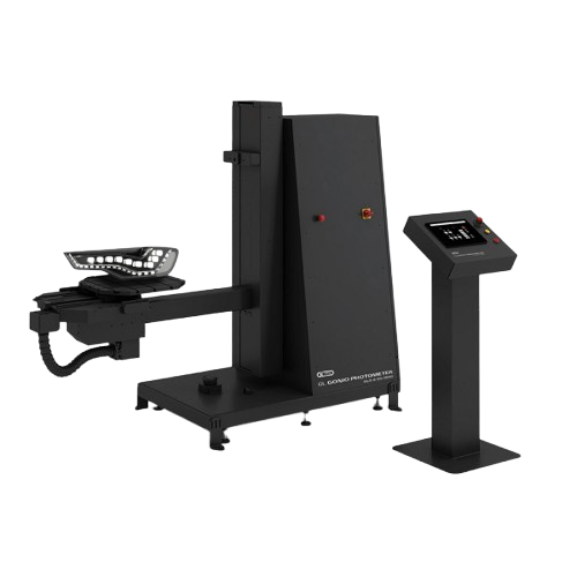 Open product: GL GONIO PHOTOMETER GLG A 50-1800
GL GONIO PHOTOMETER GLG A 50-1800
GL GONIO PHOTOMETER GLG A 50-1800 has been designed in accordance with CIE 121-1996 and… Read more
In modern optical engineering, understanding how light is distributed spatially is just as important as measuring its spectral or intensity characteristics. Goniometers allow engineers and researchers to evaluate beam angles, luminous intensity distribution, and overall optical performance with high accuracy.
By combining precise mechanical positioning with advanced photometric or spectroradiometric detection, goniometers support reliable and repeatable measurements in both laboratory and industrial environments. Their role is fundamental in ensuring compliance with lighting standards and optimising optical system design.
What is Goniometers?
Goniometers are measurement systems designed to determine the angular distribution of light emitted or reflected by a source. In photonics, they are commonly used as goniophotometers to measure luminous intensity as a function of angle.
A typical goniometer system includes:
- A rotational stage to position the light source or detector
- A detector (photometer or spectrometer)
- Control and data acquisition software
- Mounting and alignment systems
Goniometers provide detailed angular data, enabling accurate analysis of beam shape, intensity distribution, and optical performance.
How Goniometers Technology Works
Goniometers operate by rotating either the light source or the detector to measure light intensity at different angles:
- Sample positioning: The light source is mounted on a controlled stage
- Angular rotation: The system rotates the source or detector with high precision
- Light detection: A photometric or spectroradiometric detector measures intensity
- Data acquisition: Measurements are recorded across a defined angular range
- Analysis: Software generates angular distribution curves and photometric data
Key principles include:
- Angular scanning to capture full emission patterns
- Precise alignment to ensure measurement accuracy
- Integration with detectors for combined photometric and spectral analysis
This enables comprehensive characterisation of optical emission behaviour.
Applications of Goniometers
Goniometers are widely used in industries requiring detailed optical analysis:
- Lighting and LED testing – luminous intensity distribution and beam angle measurement
- Scientific research – optical characterisation and experimental analysis
- Semiconductor manufacturing – LED and photonic device testing
- Automotive lighting – headlamp and signal light analysis
- Medical and life sciences – imaging system validation
- Defence and security – optical sensor testing
- Environmental monitoring – light source evaluation
- Telecommunications – optical component characterisation
- Industrial inspection systems – quality assurance and compliance
Key Features and Capabilities
- High angular resolution and positioning accuracy
- Full 3D light distribution measurement capability
- Compatibility with photometers and spectrometers
- Support for multiple measurement geometries (Type A, B, C)
- Automated measurement and data acquisition
- High repeatability and stability
- Flexible mounting for various sample sizes
- Advanced software for data analysis and visualisation
Benefits of Using Goniometers Systems
- Accurate angular measurement of light distribution
- Improved system performance through detailed optical analysis
- Compliance with industry standards (CIE, IES)
- Reliable and repeatable measurements
- Enhanced product development for lighting and optical systems
- Efficient testing processes with automated data acquisition
These benefits are critical for ensuring performance and regulatory compliance in optical systems.
Choosing the Right Goniometers
Selecting the appropriate goniometer depends on application requirements:
- Measurement geometry (Type A, B, or C)
- Angular resolution and accuracy
- Detector compatibility (photometric or spectral)
- Sample size and mounting requirements
- Measurement speed and automation level
- Integration with existing measurement systems
- Software capabilities and data analysis tools
- Environmental conditions and space constraints
- Budget and long-term operational requirements
A well-matched system ensures accurate and efficient measurement results.
Our Goniometers Solutions
PEO Photonics offers advanced goniometer systems from GL Optic, designed for precise angular light measurement and photometric analysis.
These solutions provide:
- High accuracy and repeatability
- Integration with spectrometers and photometers
- Support for laboratory and industrial applications
Our team supports system selection, integration, and optimisation for your specific measurement requirements.
Why Choose PEO Photonics
- Expertise in photonics and optical measurement technologies
- Partnerships with leading manufacturers such as GL Optic
- Technical support for system integration and testing workflows
- Solutions tailored to research, industrial, and defence applications
- Reliable global supply and logistics
Conclusion
Goniometers are indispensable tools for analysing the angular distribution of light, providing essential data for optical design, testing, and compliance. Their ability to deliver precise and repeatable measurements makes them critical in modern photonics applications.
Explore the goniometer solutions available at PEO Photonics or contact our team for expert guidance in selecting the right system for your application.


