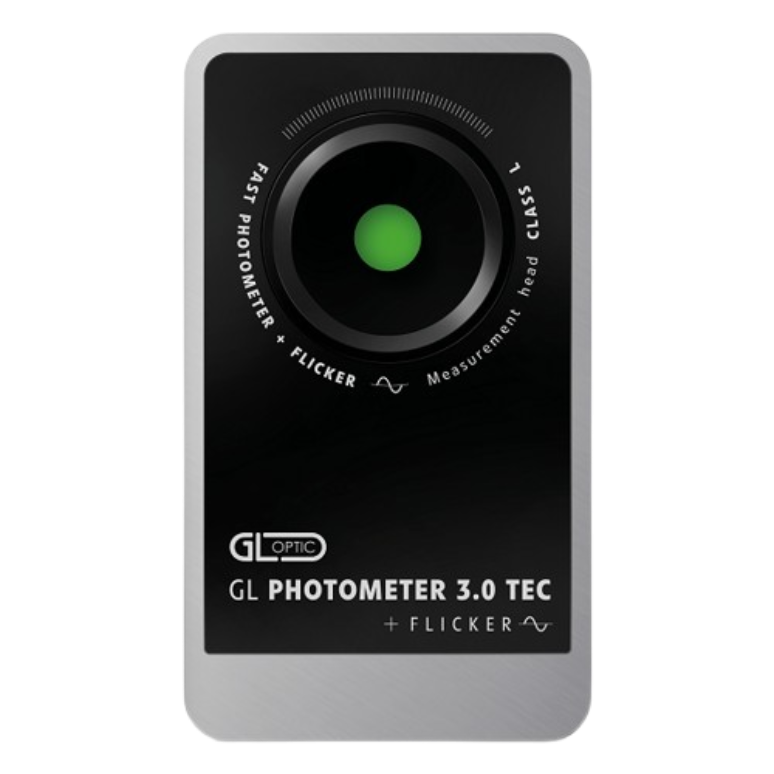
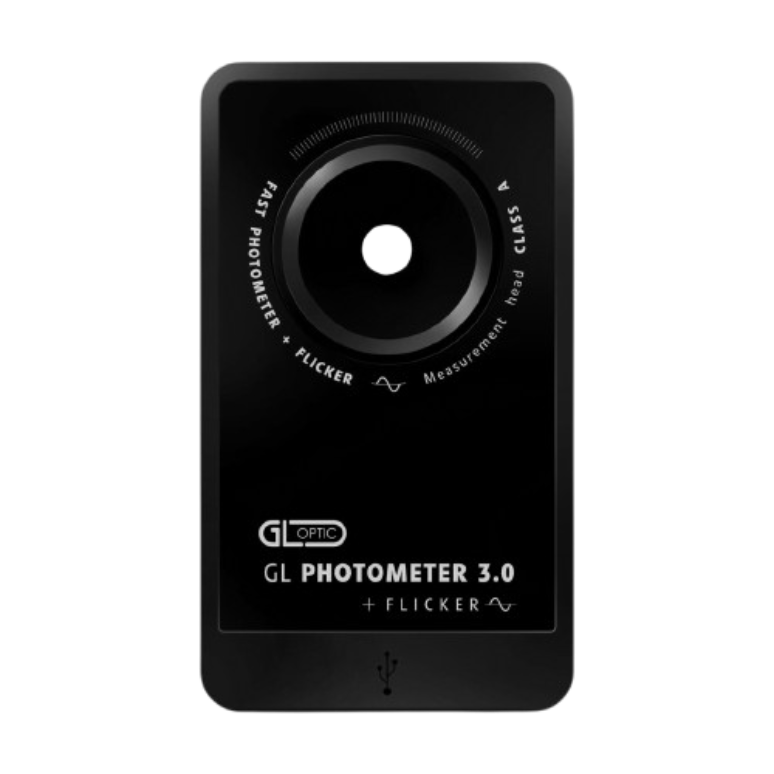
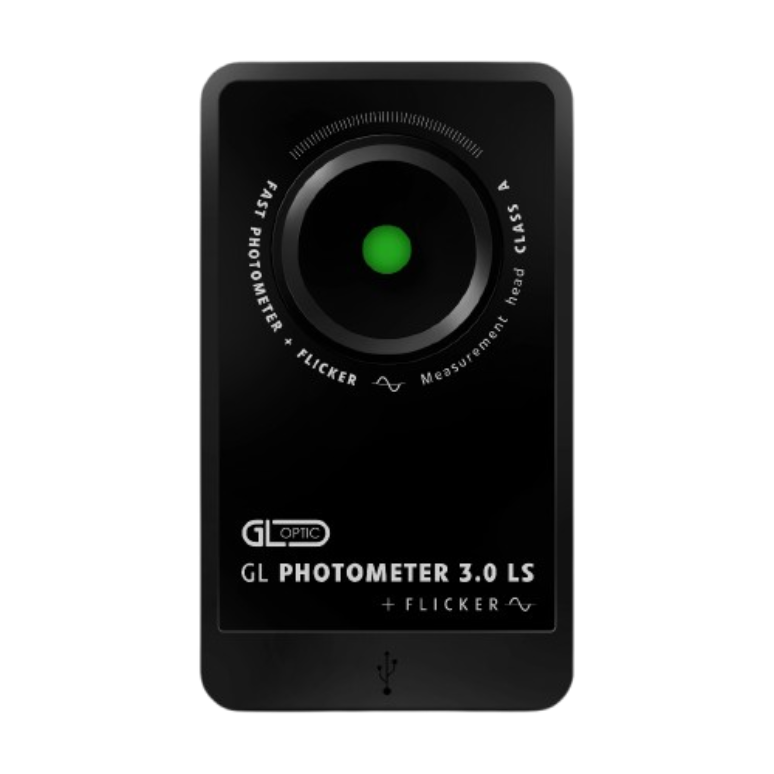
In modern optical systems, precise light measurement is critical for ensuring performance, compliance, and consistency. Whether evaluating LED lighting, calibrating displays, or conducting laboratory experiments, photometers enable engineers and researchers to assess light levels with high accuracy and repeatability.
By combining calibrated sensors, optical filtering, and advanced signal processing, photometers deliver reliable results across a wide dynamic range. Their versatility makes them indispensable tools in both controlled laboratory environments and demanding industrial applications.
What is Photometers?
Photometers are optical measurement devices designed to quantify light intensity based on human visual perception. Unlike radiometric sensors that measure absolute optical power, photometers apply photometric weighting using the V(λ) curve to match the sensitivity of the human eye.
These instruments are primarily used to measure illuminance (lux), representing the amount of light incident on a surface.
Photometers can be configured as:
- Handheld devices for portable measurements
- Laboratory instruments for high-precision analysis
- Integrated systems for automated testing environments
They are essential tools for applications where visual brightness and lighting performance are critical.
How Photometers Technology Works
Photometers operate using calibrated optical and electronic components:
- Light collection: A diffuser or optical system captures incident light
- Spectral filtering: Filters match the sensor response to the photopic curve V(λ)
- Cosine correction: Ensures accurate measurement regardless of light angle
- Signal detection: A photodiode converts light into an electrical signal
- Signal processing: Electronics process and calibrate the signal
- Output display: Measurements are presented in lux or transmitted digitally
Key operational characteristics include:
- High accuracy aligned with human visual response
- Stable and repeatable measurements
- Capability for both real-time and logged data acquisition
This ensures consistent and reliable photometric measurement across different environments.
Applications of Photometers
Photometers are widely used across multiple industries and applications:
- Lighting engineering – evaluation of LED and architectural lighting
- Industrial automation – light level monitoring and control
- Scientific research – photometric experiments and calibration
- Semiconductor manufacturing – testing optoelectronic components
- Medical and life sciences – imaging system calibration
- Defence and security – optical system validation
- Environmental monitoring – daylight and light pollution measurement
- Telecommunications – optical system testing
- Imaging and inspection systems – quality control and analysis
Key Features and Capabilities
- Accurate illuminance measurement (lux)
- Spectral response matched to human eye sensitivity
- Cosine-corrected measurement for angular accuracy
- Wide dynamic measurement range
- High repeatability and calibration stability
- Fast response time for real-time measurements
- Portable and fixed system configurations
- Flexible data output and software integration
Benefits of Using Photometers Systems
Photometers provide key advantages for optical measurement and analysis:
- Accurate light measurement aligned with human perception
- Improved system performance through reliable calibration
- Consistent quality control in lighting and display systems
- Reliable operation in laboratory and industrial environments
- Scalable integration into automated testing systems
- Efficient data acquisition and analysis
These benefits support precision engineering and compliance with photometric standards.
Choosing the Right Photometers
Selecting the appropriate photometer depends on your application requirements:
- Measurement range (lux) for expected light levels
- Accuracy and calibration standards
- Spectral response and V(λ) matching
- Cosine correction quality
- Response time and data acquisition speed
- Portability vs fixed installation
- Integration with software and automation systems
- Environmental conditions
- Maintenance and calibration requirements
Careful selection ensures reliable and accurate measurement performance.
Our Photometers Solutions
PEO Photonics offers high-performance Photometers from GL Optic, a leading provider of advanced light measurement solutions.
These systems are designed to:
- Deliver precise and reliable photometric measurements
- Support laboratory, industrial, and field applications
- Integrate seamlessly into testing and calibration workflows
Our team provides expert support to help select the most suitable photometer for your application.
Why Choose PEO Photonics
- Expertise in photonics and optical measurement technologies
- Partnerships with leading manufacturers such as GL Optic
- Technical support for system integration and optimisation
- Solutions tailored for research, industrial, and defence applications
- Reliable global supply and logistics
Conclusion
Photometers are essential tools for accurate light and illuminance measurement in modern photonic systems. Their ability to deliver reliable, perceptually relevant data makes them indispensable for engineering, research, and industrial applications.
Explore the photometer solutions available from PEO Photonics or contact our team for expert guidance tailored to your requirements.