Temperature Regulation and Control Solution systems are critical for maintaining measurement accuracy and stability in photonics, optical engineering, and light measurement applications. Thermal fluctuations can significantly impact sensor performance, spectral output, and calibration accuracy, making precise temperature control essential in both laboratory and industrial environments.
Temperature regulation and control solution
Other
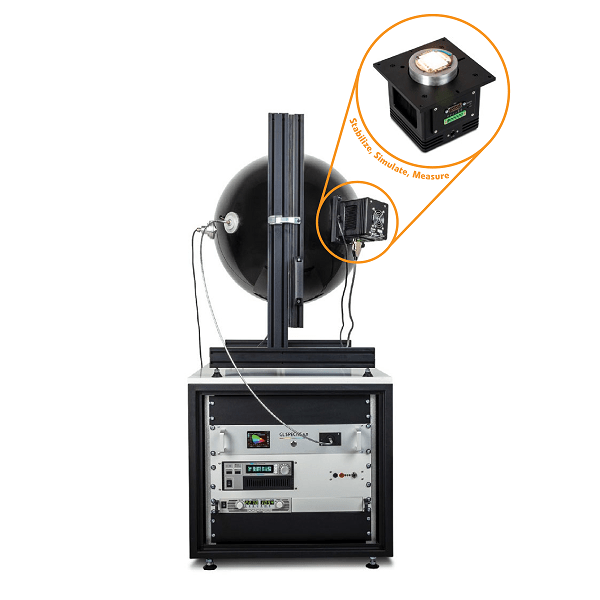 Open product: GL TEC CONTROL SYSTEM
GL TEC CONTROL SYSTEM
GL TEC Control System is a new solution which guarantees a complete temperature regulation and… Read more
In advanced optical systems, even small variations in temperature can introduce drift, reduce repeatability, and compromise data integrity. Temperature Regulation and Control Solution technologies address these challenges by providing controlled thermal environments, enabling consistent and reliable performance of optical instruments such as photometers, luminance meters, and spectroradiometers.
By ensuring stable operating conditions, these systems play a vital role in calibration, testing, and high-precision measurement processes across a wide range of applications.
What is Temperature Regulation and Control Solution?
A Temperature Regulation and Control Solution is a system designed to maintain precise thermal conditions for optical components and measurement devices. It ensures that temperature-sensitive equipment operates within defined limits, minimising thermal drift and performance variability.
These systems typically include:
- Temperature sensors for real-time monitoring
- Control units (e.g. PID controllers) for precise regulation
- Heating or cooling elements
- Feedback mechanisms to maintain stability
In photonics, temperature control is essential for ensuring consistent optical output, accurate calibration, and reliable system performance.
How Temperature Regulation and Control Solution Technology Works
Temperature Regulation and Control Solution systems operate through a closed-loop control mechanism:
- Temperature sensing: Sensors continuously monitor system temperature
- Feedback processing: Control units analyse deviations from target values
- Thermal adjustment: Heating or cooling elements adjust temperature accordingly
- Stabilisation: The system maintains a stable thermal state over time
Key principles include:
- PID control algorithms for precise temperature regulation
- Thermal management techniques to minimise gradients and hotspots
- Real-time feedback loops to ensure rapid response to changes
These systems ensure consistent environmental conditions, which are critical for high-precision optical measurements.
Applications of Temperature Regulation and Control Solution
Temperature Regulation and Control Solution systems are used across multiple industries:
- Scientific research – stabilising sensitive optical experiments
- Semiconductor manufacturing – maintaining process consistency
- Spectroscopy and analysis – ensuring measurement accuracy
- Lighting and display testing – controlling thermal conditions for LEDs and displays
- Medical and life sciences – imaging and diagnostic systems
- Defence and security – high-precision optical instrumentation
- Environmental monitoring – stable sensor operation
- Telecommunications – optical component performance stability
- Industrial inspection systems – repeatable measurement conditions
Key Features and Capabilities
- Precise temperature control with high stability (±°C accuracy)
- Wide operating temperature range
- Fast response time and real-time feedback
- Advanced PID control systems
- Uniform temperature distribution
- Integration with optical measurement equipment
- Compact and modular design
- Reliable operation in laboratory and industrial environments
Benefits of Using Temperature Regulation and Control Solution Systems
- Improved measurement accuracy by reducing thermal drift
- Enhanced system performance through stable operating conditions
- Increased repeatability in calibration and testing processes
- Reliable operation in variable environmental conditions
- Scalable integration into complex measurement systems
- Optimised data quality for critical applications
These benefits are essential for achieving high-precision results in photonics and optical engineering.
Choosing the Right Temperature Regulation and Control Solution
When selecting a Temperature Regulation and Control Solution, consider:
- Required temperature range and stability
- Precision and control accuracy (PID performance)
- Thermal load and system size
- Integration with existing optical equipment
- Environmental conditions (laboratory vs industrial)
- Software and control interface compatibility
- Maintenance and calibration requirements
- Budget and lifecycle costs
Selecting the right system ensures optimal performance and long-term reliability.
Our Temperature Regulation and Control Solution
PEO Photonics offers advanced Temperature Regulation and Control Solution systems from GL Optic, designed for high-precision optical measurement and calibration applications.
These solutions are engineered to:
- Maintain stable thermal conditions for sensitive instruments
- Support accurate photometric and radiometric measurements
- Integrate seamlessly into laboratory and industrial workflows
Our team provides expert guidance to ensure optimal system selection and integration.
Why Choose PEO Photonics
- Extensive expertise in photonics and optical measurement technologies
- Partnerships with leading manufacturers such as GL Optic
- Technical support for system integration and optimisation
- Solutions tailored to research, industrial, and defence applications
- Reliable global supply and logistics
Conclusion
Temperature Regulation and Control Solution systems are essential for ensuring accuracy, stability, and repeatability in optical measurement and photonics applications. By maintaining controlled thermal conditions, these systems minimise drift and enhance overall system performance.
Explore PEO Photonics’ Temperature Regulation and Control Solution offerings or contact our team for expert advice on selecting the right thermal management system for your application.


