Sensor Chip

Sensor Chip technology is at the core of modern photonic and optical detection systems, enabling high-performance photon detection, imaging, and time-resolved measurement at the semiconductor level. These compact, highly integrated devices form the foundation of advanced sensing platforms, including SPAD imaging systems, LiDAR, and quantum optics instrumentation.
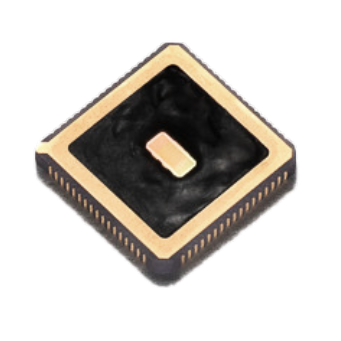 Open product: Asynchronous photon-driven sensor (NV04ASC)
Asynchronous photon-driven sensor (NV04ASC)
The NovoViz NV04ASC asynchronous photon-driven sensor chip is engineered to meet the demands of applications… Read more
In today’s photonics landscape, the demand for miniaturised, high-speed, and highly sensitive detection solutions continues to grow. Sensor chips address these requirements by integrating photon detection, signal generation, and pixel-level processing into a single semiconductor structure. This allows for precise measurement of light intensity, timing, and spatial distribution, even under extremely low-light conditions.
For engineers, researchers, and OEM developers, Sensor Chip solutions provide the flexibility to build customised systems while maintaining high performance and scalability across a wide range of applications.
What is Sensor Chip?
A Sensor Chip is a semiconductor device designed to detect optical or photonic signals and convert them into electrical outputs. In advanced photonics applications, these chips often incorporate arrays of sensitive elements such as single photon avalanche diodes (SPADs) or photodiodes.
Sensor chips serve as the core detection component within larger systems, enabling:
- Photon counting and light intensity measurement
- Time-resolved detection
- Spatial imaging through pixel arrays
They are typically integrated with external readout electronics, processing units, and optical components to form complete sensing systems.
How Sensor Chip Technology Works
Sensor Chip technology relies on semiconductor-based photon detection and signal generation:
- Photon interaction: Incident photons are absorbed within the semiconductor material
- Carrier generation: Electron-hole pairs are created
- Signal amplification: In SPAD-based chips, avalanche multiplication amplifies the signal
- Pixel-level detection: Arrays of pixels capture spatial and temporal information
- Readout processing: External or integrated electronics convert signals into usable data
Key operational characteristics include:
- High sensitivity to low light levels
- Fast response and timing resolution
- Capability for single-photon detection in advanced designs
The integration of pixel arrays and timing electronics enables high-resolution imaging and time-of-flight measurements.
Applications of Sensor Chip
Sensor Chips are used across a wide range of advanced photonic applications:
- LiDAR and 3D imaging – time-of-flight distance measurement
- Scientific research – quantum optics and photon correlation
- Spectroscopy and analysis – time-resolved measurements
- Medical and life sciences – fluorescence imaging and diagnostics
- Semiconductor manufacturing – inspection and testing
- Defence and security – advanced sensing and detection systems
- Telecommunications – optical signal detection and analysis
- Environmental monitoring – photon-based sensing
- Imaging and inspection systems – high-speed and low-light imaging
Key Features and Capabilities
- High photon detection efficiency (PDE)
- Low dark count rate for improved signal accuracy
- Picosecond-level timing resolution
- High-speed operation and data acquisition
- Pixel array configurations for imaging applications
- Compact semiconductor design for integration
- Wide spectral sensitivity depending on technology
- Compatibility with advanced readout and processing systems
Benefits of Using Sensor Chip Systems
Sensor Chip solutions offer significant advantages in photonic system design:
- High sensitivity and precision for photon detection
- Compact integration enabling miniaturised systems
- Enhanced system performance in time-resolved and imaging applications
- Scalability for OEM development and custom solutions
- Efficient data acquisition for dynamic processes
- Flexibility for integration into complex optical systems
These benefits support innovation across both research and industrial environments.
Choosing the Right Sensor Chip
Selecting the appropriate Sensor Chip requires careful evaluation of application requirements:
- Spectral sensitivity for the target wavelength range
- Photon detection efficiency (PDE)
- Dark count rate (DCR) and noise performance
- Timing resolution and jitter
- Pixel size, pitch, and array configuration
- Integration requirements with readout electronics
- Thermal management and environmental conditions
- Power consumption and system constraints
- Scalability for future system development
Careful consideration of these factors ensures optimal system performance.
Our Sensor Chip Solutions
PEO Photonics offers advanced Sensor Chip solutions in partnership with leading manufacturers, supporting high-performance photon detection and imaging applications.
These solutions provide:
- Reliable and precise photon detection
- Compatibility with SPAD imaging and advanced sensing systems
- Integration into custom photonic and OEM platforms
Our team provides expert guidance to ensure the right sensor chip is selected for your application.
Why Choose PEO Photonics
- Expertise in photonics, optical sensing, and imaging technologies
- Partnerships with leading sensor chip manufacturers
- Technical support for system integration and optimisation
- Solutions tailored for research, industrial, and defence applications
- Reliable global supply and logistics
Conclusion
Sensor Chip technology is a fundamental building block in modern photonics, enabling high-performance photon detection, imaging, and time-resolved measurement. Its compact design and advanced capabilities make it essential for a wide range of applications, from scientific research to industrial systems.
Explore the Sensor Chip solutions available at PEO Photonics or contact our team for expert support in selecting and integrating the right technology.


